
In the fast-evolving landscape of digital transformation, legacy IT infrastructure continues to pose substantial challenges for global enterprises. Recent surveys indicate that approximately 62% of organizations still depend on outdated legacy software systems, which inflate maintenance expenses, heighten security vulnerabilities, and limit scalability Quinnox - Legacy Modernization.
For businesses in manufacturing and logistics spanning North America (NA), Europe, Middle East, and Africa (EMEA), and the Caribbean, these antiquated systems—marked by fragmented ERP integrations and heterogeneous networks (e.g., Cisco in one facility versus Juniper or Huawei in another)—undermine operational efficiency and competitive edge. As highlighted by Gartner, 46% of organizations are prioritizing application modernization investments in 2026, fueled by emerging trends such as hybrid computing, AI platforms, and modular cloud architectures Gartner Top Strategic Technology Trends for 2026 Gartner Top Trends Impacting Infrastructure and Operations for 2026.
The Challenges of Legacy IT Infrastructure in Global Operations
Legacy IT infrastructure encompasses outdated systems like aging ERP software, operational technology (OT) environments, and disjointed networks designed for a pre-cloud era. These setups create data silos that impede integration with contemporary technologies such as IoT and AI. Gartner reports that 40% of enterprise systems have exceeded their end-of-life, resulting in operational fragility, escalating technical debt, and inefficiencies NTT DATA - Gartner: Modernization and Migration. Moreover, 60% of businesses plan to launch modernization initiatives within the next year to mitigate these risks Torry Harris - Legacy Application Modernization.
In manufacturing, facilities in Michigan (NA) or Valencia (EMEA) often rely on obsolete ERP systems that fail to sync with IoT, delaying Industry 4.0 adoption and amplifying OT ransomware threats. Logistics operations suffer from non-integrated transportation management systems in regions like California or Portugal, leading to diminished real-time visibility for cross-border shipments and inconsistencies from multiple IT integrators. In the Caribbean, where sites in Puerto Rico or Dominica are prone to natural disasters, legacy connectivity issues exacerbate downtime and recovery challenges.
The repercussions are significant: Heterogeneous setups (e.g., Cisco versus Huawei) can inflate infrastructure costs by 20-30% due to maintenance complexities Saritasa - Legacy Software Modernization in 2025 Survey. Compliance becomes burdensome under frameworks like CCPA in NA, GDPR in EMEA, or FATCA in the Caribbean, while talent shortages for specialized upkeep further strain resources. Modernization is thus critical in 2026's interconnected ecosystem.

Practical Steps to Standardize Legacy IT Infrastructure
Achieving standardization demands a methodical framework, inspired by Gartner's five modernization approaches: rehost, replatform, rearchitect, rebuild, or replace Devox Software - 2026 Legacy Modernization Trends Report LinkedIn Post by Anastasia Kukhmar.
Step 1: Comprehensive Evaluation and Assessment
Conduct a detailed audit to catalog legacy elements, pinpoint integration gaps (e.g., outdated ERP not aligning with IoT), and evaluate heterogeneity—such as varying networks across Toronto (Cisco) and Ohio (Juniper). Engage stakeholders including CIOs and compliance officers. In EMEA, emphasize data traceability for GDPR; in the Caribbean, assess resilience against hurricanes. This phase, typically spanning 4-6 weeks, establishes a risk-mitigated roadmap.
Step 2: Adopt Hybrid Cloud Strategies
Shift to hybrid cloud environments to merge on-premises legacy with scalable cloud solutions. Gartner predicts that by 2028, over 40% of organizations will embrace hybrid computing to support AI Gartner Top Trends Impacting Infrastructure and Operations for 2026. Begin by migrating non-critical workloads to platforms like AWS or Azure, employing Infrastructure as Code (IaC) for automation. This eliminates silos and facilitates AI efficiencies, vital for 2026 advancements. For Caribbean sites, integrate geo-redundant backups; in NA/EMEA, ensure alignment with HIPAA or EMA standards.
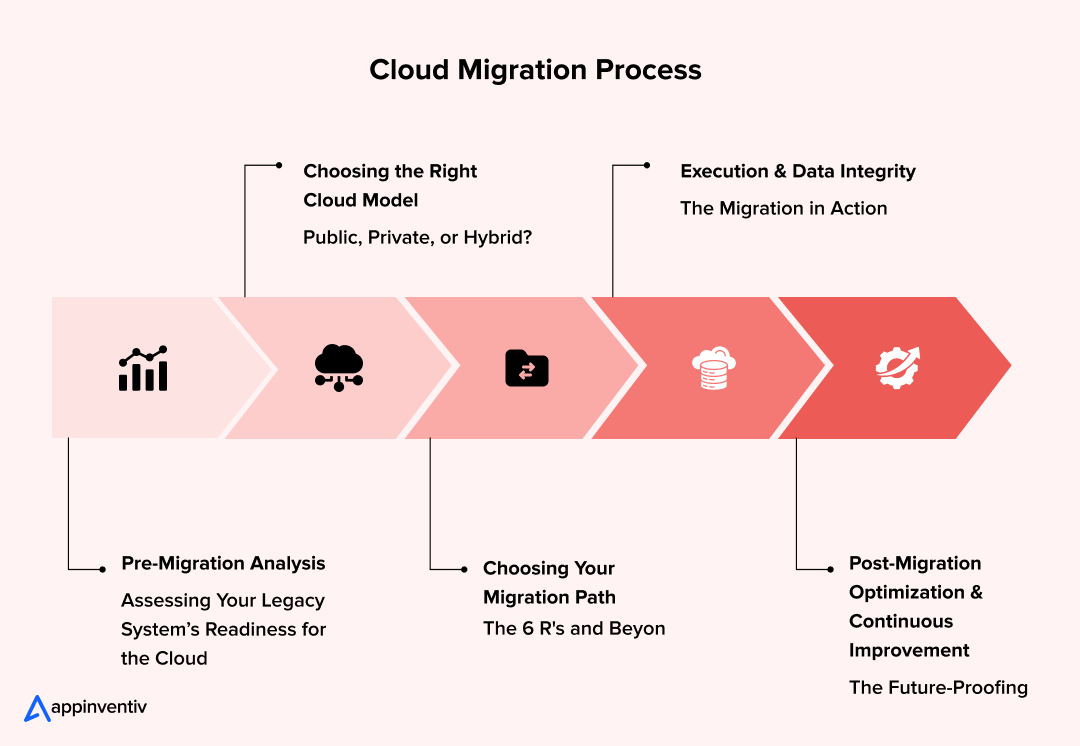
Here is a diagram illustrating the hybrid cloud migration process:
Step 3: Unification of Networks and Providers
Consolidate multiple IT vendors into a unified ecosystem. Transition from disparate hardware to standardized platforms, such as a Cisco-based network across facilities. Incorporate DevSecOps for secure integration, tackling OT cybersecurity. In 2026, modular cloud architectures will streamline this, enabling phased migrations without downtime Gartner Top Strategic Technology Trends for 2026. Secure SLAs for region-specific support in Canada or Portugal.
Step 4: Implementation and Ongoing Monitoring
Deploy in phases: Initiate a pilot in one region (e.g., NA), then expand. Track KPIs like reduced downtime and cost efficiencies. Utilize AI for code refactoring to expedite processes Gartner - The Top CIO Challenges. Conduct regular audits to adapt to trends like quantum readiness.
Benefits and ROI of Standardization
Standardization delivers measurable advantages. Enterprises report an average ROI of 228%, with recoupment in under 15 months, driven by 20-30% infrastructure cost reductions through rehosting Saritasa - Legacy Software Modernization in 2025 Survey. Efficiency surges with real-time integration, slashing logistics delays by up to 30%. Compliance simplifies, mitigating risks under CCPA, GDPR, or FATCA, while enhanced resilience counters Caribbean disasters.
ROI example: An initial $500K investment (assessment and migration) yields annual savings of $150K from vendor consolidation plus $200K in efficiency gains, equating to a 140% two-year ROI.
To illustrate the benefits in a structured cycle:
-1.png?width=1584&height=960&name=Axify%20blogue%20header%20(6)-1.png)
Case Study: A Global Manufacturer's Transformation
Envision Acme Manufacturing, a $150M revenue entity with 600 employees, headquartered in the US and operating plants in Michigan (NA), Madrid (EMEA), and Puerto Rico (Caribbean). They contended with legacy ERP integration failures, heterogeneous networks (Cisco in NA, Huawei in EMEA), elevated costs from multiple vendors, and hurricane vulnerabilities in the Caribbean. Adhering to the outlined steps, Acme performed an audit, migrated to hybrid cloud (Azure for scalability), unified networks under Cisco, and streamlined vendors. V-Corp International offered customized assistance, including local SLAs and compliance guidance. Outcomes: A 25% cost reduction ($2M annually), 40% efficiency improvement via IoT, and uninterrupted operations during a Caribbean storm due to robust backups. This paved the way for Latin American expansion, mirroring ideal client profiles.
Next Steps
In 2026, legacy modernization is indispensable for global operations, propelled by hybrid computing and AI infrastructure trends Gartner Top Strategic Technology Trends for 2026. Standardizing IT infrastructure enables cost savings, heightened efficiency, and future-proofing against disruptions.
Prepared to optimize your operations? .Email us to sales@vcorpintl.com to embark on your standardized, efficient future.